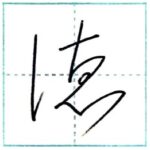
前回と今回の記事で、草書の「徳」を2種類紹介しています。今回はそのPart.2です。
ぜんかいとこんかいのきじで、そうしょの「徳(とく)」をにしゅるいしょうかいしています。こんかいはそのパートツーです。
I’m introducing 2 types of 徳(toku) in cursive script in the previous and this article. This time is the Part.2.
スポンサーリンク
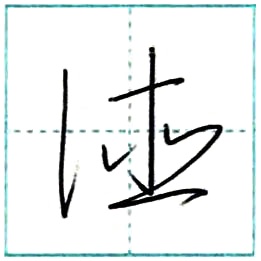
草書は日常生活で書くことはなく、 書道の作品でのみ使われています。
そうしょはにちじょうせいかつでかくことはなく、 しょどうのさくひんでのみつかわれています。
We don’t write cursive script in daily life, it’s used only in calligraphy works.
単語例(たんごれい)
Word examples
堀田 徳男 [ほった のりお hotta nori o] = Hotta Norio in a Japanese manga SLAM DUNK
※SLAM DUNK [スラム ダンク su ra mu da n ku]
森 辰徳 [もり たつのり mori tatsu nori] = Mori Tatsunori in a Japanese manga The Prince of Tennis
徳川カズヤ [とくがわカズヤ toku gawa ka zu ya] = Tokugawa Kazuya in The Prince of Tennis
※テニスの王子様 [テニスの おうじさま te ni su no ou ji sama] = The Prince of Tennis
狩野 永徳 [かのう えいとく ka nou ei toku] = Japanese painter Kanō Eitoku (1543–1590)
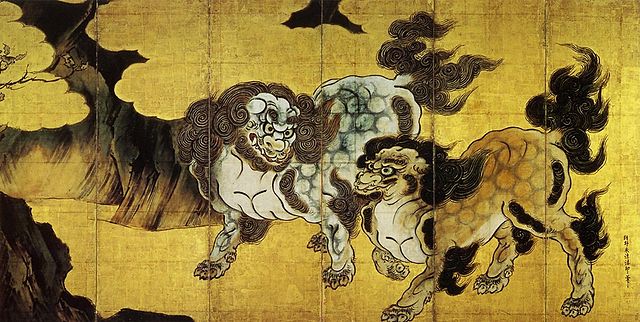
『唐獅子図屏風』 [からじしず びょうぶ kara ji shi zu byou bu] = “Chinese Lions” painted by Kanō Eitoku
(source) public domain of Wikimedia Commons
スポンサーリンク
書き順(かきじゅん)
Stroke order
1.
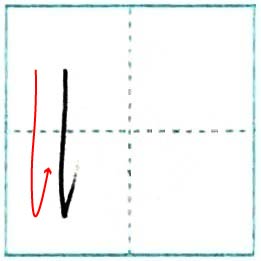
2.
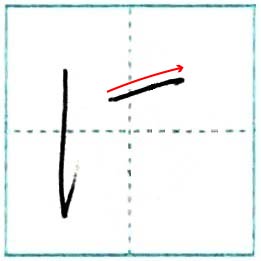
3.
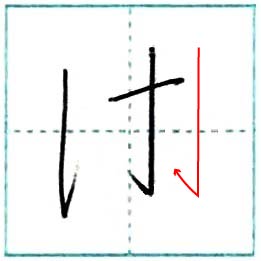
4.
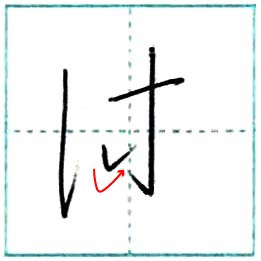
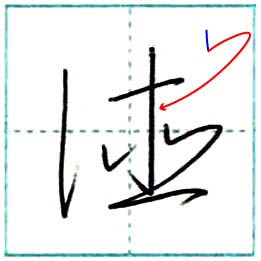
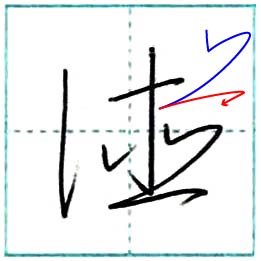
5. 次の線は、1画で書きます。
つぎのせんは、いっかくでかきます。
Write the next line with one stroke.
5-1.
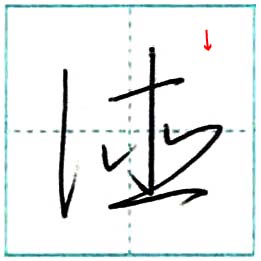
5-2.
5-3.
6. 完成(かんせい) Finish
公開日/post 2026.03.05
更新日/update 2026.03.05
スポンサーリンク