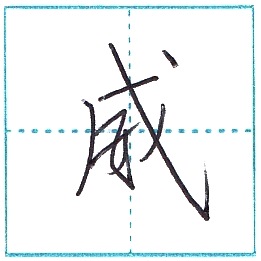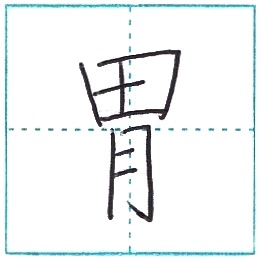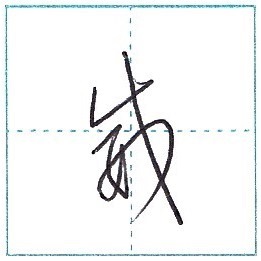
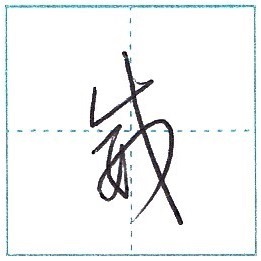
今回は、草書の「威」です。
こんかいは、そうしょの「威(い)」です。
This time is 威(i) in cursive script.
スポンサーリンク
草書は日常生活で書くことはなく、 書道の作品でのみ使われています。
そうしょはにちじょうせいかつでかくことはなく、 しょどうのさくひんでのみつかわれています。
We don’t write cursive script in daily life, it’s used only in calligraphy works.
単語例(たんごれい)
Word examples
威風堂々 [いふうどうどう i fuu dou dou] = being majestic, “Pomp and Circumstance” of Edward Elgar
鹿威し [ししおどし shishi odo shi] = Japanese device for keeping animals away from a garden
スポンサーリンク
書き順(かきじゅん)
Stroke order
1. 最初の線は、1画で書きます。
さいしょのせんは、いっかくでかきます。
Write the first line with one stroke.
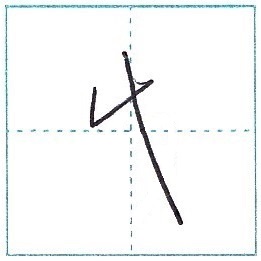
1-1.
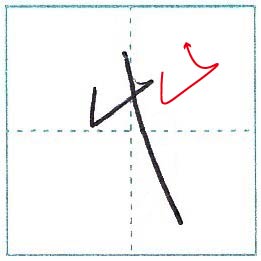
1-2.
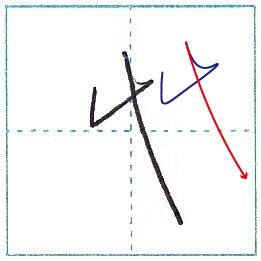
※下のように、1-1と1-2を離しても構いません。
したのように、1-1と1-2をはなしてもかまいません。
Or, you can also write 1-1 and 1-2 separately, as follows.
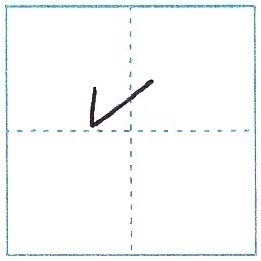
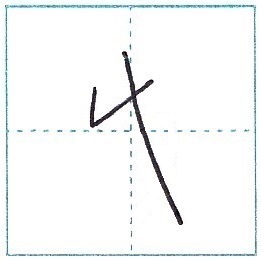
2.
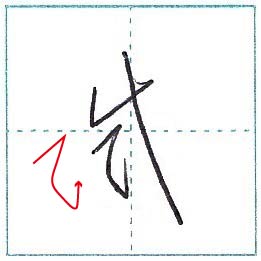
3. 次の線も、1画で書きます。
つぎのせんも、いっかくでかきます。
Write the next line with one stroke, too.
3-1.
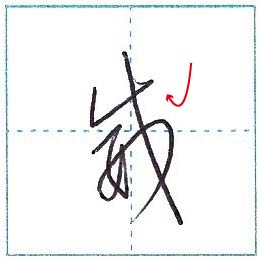
3-2.
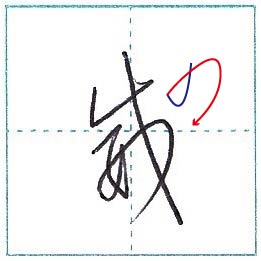
4. 完成(かんせい) Finish
公開日/post 2015.05.31
更新日/update 2021.05.10
スポンサーリンク